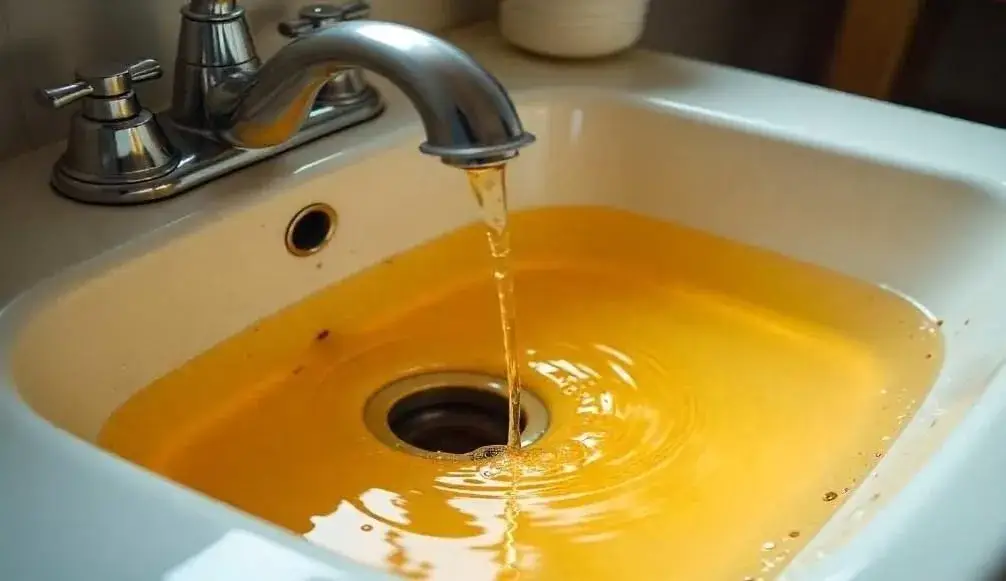
For homeowners who have discovered that their property is connected to a lead service line—or who suspect that their interior plumbing contains lead-based solder or old fixtures—the immediate question is always: “What can I do right now to keep my family safe?”
While long-term solutions like full-scale infrastructure replacement are the ultimate goal, there is a simple, immediate, and effective technique that can significantly lower lead levels in your drinking water: flushing your tap. Understanding why this works and how to do it correctly is a fundamental piece of your home water safety strategy.
The Chemistry of Stagnation
To understand why flushing works, you have to understand the process of leaching. Lead does not typically flow constantly into your water at a high rate. Instead, it leaches into the water when that water is allowed to sit undisturbed in your pipes—a state known as stagnation.
Think of your service line as a container. If you leave your home for eight hours while you are at work, or if you sleep for eight hours at night, the water is sitting in constant contact with the interior walls of your pipes. If those pipes are made of lead, or if they contain lead-based solder, the lead atoms slowly detach from the metal and dissolve into the water. The longer the water sits in the pipes, the higher the concentration of dissolved lead becomes.
By “flushing” the tap, you are essentially purging that stagnant, high-concentration water and replacing it with fresh, flowing water directly from the city’s water main. This fresh water has had minimal contact with your household plumbing and, therefore, has had far less time to pick up lead.
Is Flushing Enough?
Flushing is a highly effective, low-cost risk reduction measure, but it is important to be realistic about its role. It is a temporary mitigation tool, not a permanent fix.
It is most effective when:
- You have confirmed that your home is connected to lead service lines.
- Your home has older interior plumbing that may contain lead-containing components or solder.
- You are waiting for scheduled utility work or a planned private pipe replacement.
However, flushing does not remove the source of the lead. If you live in an area with aging cities and infrastructure, the risk remains in the pipes themselves. While flushing is excellent for day-to-day exposure, it should ideally be paired with other measures—such as using an NSF-certified water filter and keeping up with regular water testing—to ensure your safety.
The Correct Way to Flush
Many people believe that turning on the tap for ten seconds is sufficient. In most cases, it is not. Because the lead may be sitting in the service line—which can be many feet long and buried under your lawn—you need to run the water long enough to clear that entire volume.
- Wait for Stagnation: If the water has been sitting for 6 hours or more, it is time to flush.
- Go to the Lowest/Furthest Tap: Start by flushing a cold water tap on the lowest level of your home, or the one furthest from where the water service line enters the building. This pushes the water through the largest portion of your home’s plumbing.
- Run the Cold Water: Always use cold water. Never flush with hot water, as heat significantly accelerates the leaching process, potentially drawing even more lead into the water than you would have had otherwise.
- The Duration: While 3 to 5 minutes is a common recommendation, the exact time depends on the length of your service line. If you are unsure, contact your local water utility; they often have specific guidance based on the average service line length in your neighborhood.
You can find more practical, day-to-day advice on how to manage these steps by visiting our FAQ page.
Why “Cold Only” Is the Golden Rule
One of the most important things to remember in your home is to never use hot water from the tap for drinking, cooking, or mixing baby formula.
As we discuss in our guide to plumbing and lead, the chemical reaction between water and lead is temperature-dependent. Heat is a catalyst for corrosion. When you use hot water, you are essentially creating an environment where lead is released more rapidly and in higher concentrations. Even if you have flushed your pipes with cold water, drawing hot water from your water heater can re-introduce lead that may have settled or leached into the tank.
Addressing the Source
Flushing is a vital habit, but it is an acknowledgment that your home’s infrastructure needs attention. Because lead exposure is linked to serious health concerns, it is vital to keep your eyes on the long-term objective: removing the lead from your property entirely.
If you are consistently seeing high levels of lead in your water tests—even after practicing regular flushing—it is a clear sign that you need to investigate further. It may be time to speak with your local utility or a licensed plumber about a full service line replacement.
We Are Here to Support You
Navigating the details of your home’s water quality can be complex. You don’t have to manage these decisions on your own.
If you have questions about whether flushing is enough for your specific home, or if you need help finding resources on how to test your water or talk to your utility about potential replacements, please contact us. We are dedicated to helping homeowners like you make informed decisions. To stay up to date on best practices, the latest in water safety technology, and ongoing advocacy efforts, be sure to visit our blog regularly.
By committing to a simple routine like flushing, you are taking a powerful, proactive step to protect your household. You are no longer leaving your water quality to chance; you are actively managing it.
Disclaimer: This article is for informational purposes only and does not constitute professional medical, engineering, or plumbing advice. If you have concerns about the safety of your drinking water, always consult with your local water utility or a certified environmental testing laboratory.
Further Reading
Are you currently practicing a regular flushing routine, and do you know how much time you need to run your taps to effectively clear your home’s service line?